
Chairman Meow is a solitary kitty, and enjoys living alone. However, many lonely humans wrestle with a nagging question that keeps them up at night, “If I die, will my cat eat me?”
Teacher Meow is here to provide you with infallible wisdom, and the answer to this profound existential question: “Yes, a little bit.”
There are many studies about cats, but Chairman Meow can not find a single one that focuses on cats eating their owners. Perhaps it is because humans do not prioritize putting academic resources and funding into the observation and study of cats eating humans, and instead put funding towards other politically correct and woke topics like Alzheimer’s disease or restless legs syndrome?
Or, perhaps some ambitious scholars did begin studies of cats eating people, which were never completed… because they were eaten by the cats.
Either way, here is everything you must know about when, how, and why your cat will eat you when you die.
When will my cat eat me after I die?
Now that you know your cat will probably eat you if you die alone, let us discuss exactly when it will eat you. Once again, due to the dearth of peer-reviewed studies about cats eating their owners, we must rely on information from other sources including first responders who are most likely to discover such an unfortunate situation.
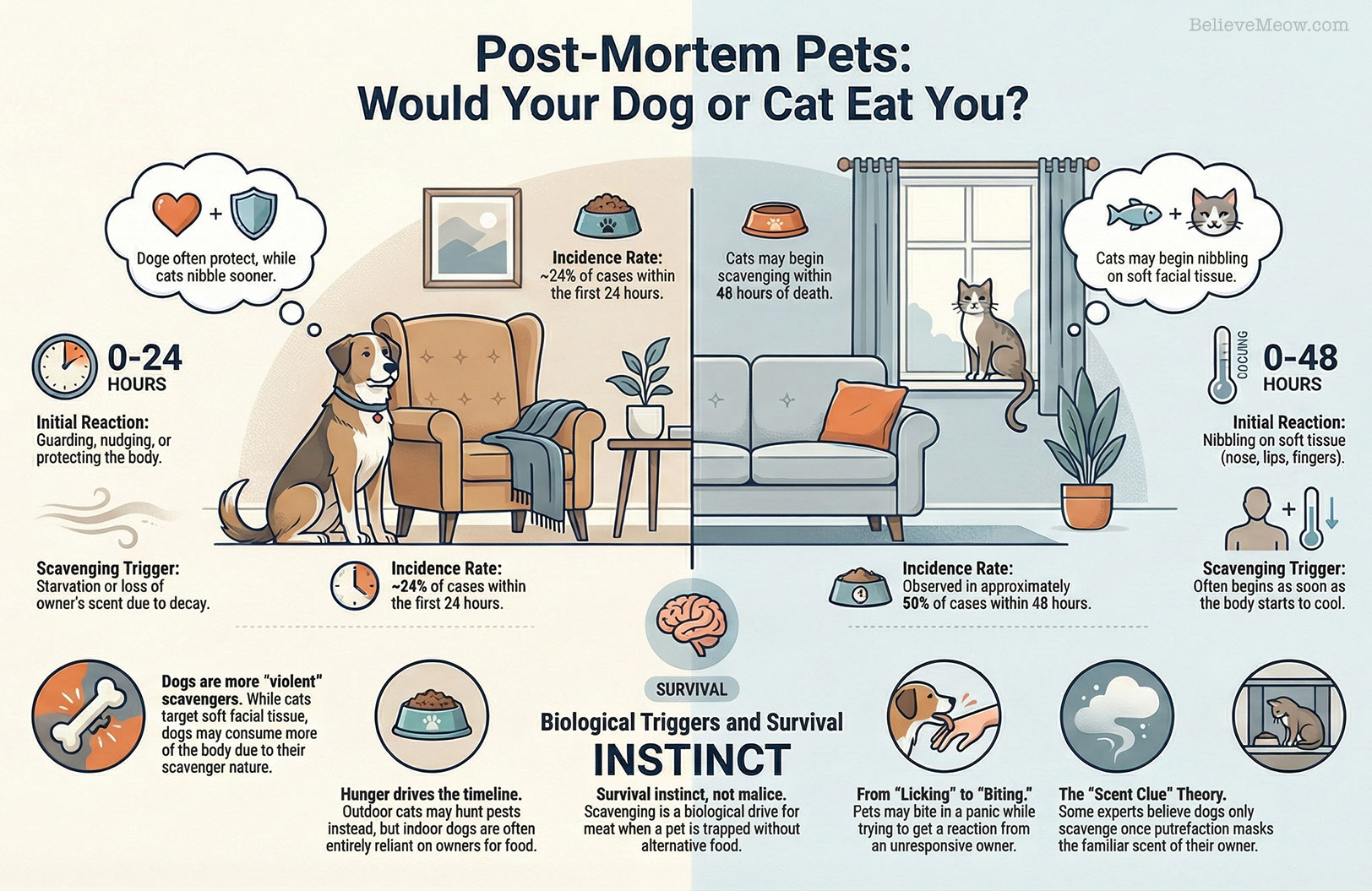
In this case, first-hand accounts suggest that cats start nibbling after their owner’s body has cooled, usually within the first 48 hours.
Unlike dogs, cats are natural hunters, so they will likely look for mice or birds as their first option if their regular food is not available. For this reason, an outdoor cat is less likely to eat their owner, or will wait longer to do so.
How will my cat eat me after I die?
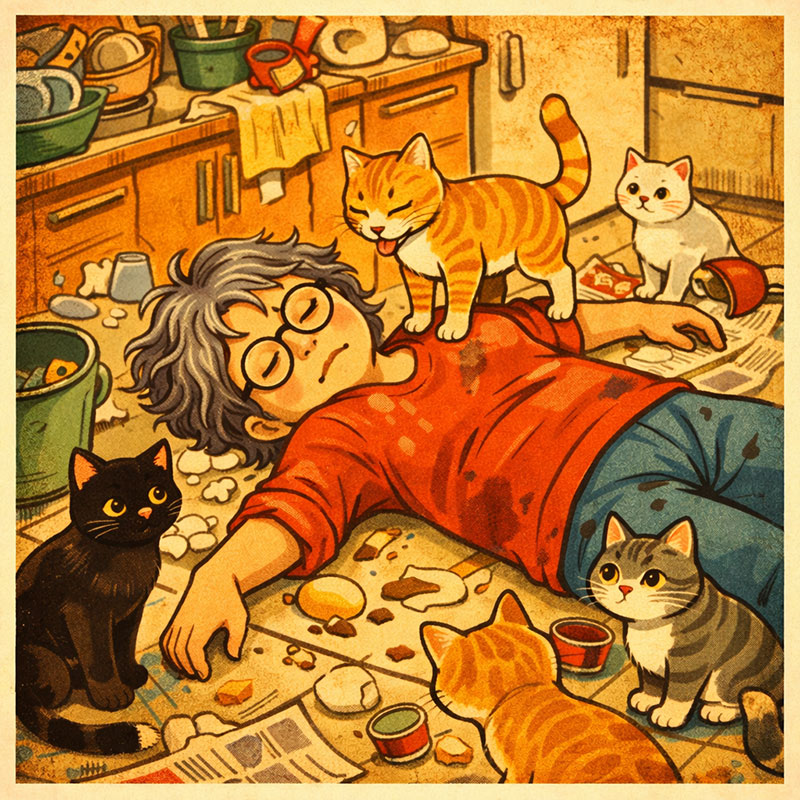
“I think we have to come to the conclusion that our pets will eat us. It’s just a fact of life” – Carolyn Rando, forensic anthropologist – source
When a cat eats its owner, it rarely starts with hungry, ravenous bites like starving dog or portly American child at Golden Corral. Instead, a cat might find their owner unresponsive and start licking or nudging their face to try and wake them up.
When the owner doesn’t respond, the pet can become frantic or panicked. That licking can turn into nipping or biting as the cat tries to get a reaction. If that biting draws blood, it can inadvertently trigger the animal’s predatory or scavenging instincts, leading them to start eating their owner, beginning with soft tissues like the nose, lips, and fingertips, and then, possibly your eyeballs.
Chairman Meow say: Comrade, I imagine all of this will make a disgusting sound in your empty, quiet house. Possibly like someone eating lasagna with their mouth open? God willing, there will be no witnesses when it happens, such as a pet rabbit with an auto feeder.
Why will my cat eat me after I die?
First of all, Chairman Meow does not like the accusatory tone of that question.
In this scenario you are dead, alone, and made of meat, so don’t overplay your hand here.
Anyway, most of the time that cats eat their owners it is in socially isolated environments where the owner lived alone and wasn’t found for days or weeks. In these situations, the pets are often trapped without access to their usual food.
It’s also much more common in cat hoarding situations, where many animals are kept in unsanitary conditions and are already struggling with hunger. In those extreme cases, the drive for survival simply overrides any domestic bond.
Also, just because your cat might eat your face after you die doesn’t mean you have the right to judge them or get angry.
Tip: Comrades, even if your hungry kitty does nibble on your corpse nose and finger tips, don’t worry. Just think of it as upcycling your flesh. It’s good for the environment and can be rewarding, too – like giving a homeless person your boxed leftovers from Applebees.
Here is helpful infographic prepared by the Feline Ministry of Information:
Good News, Bad News Situation
The good news is that the kitty does not want to eat you.
The bad news is that it can happen.
If a regrettable situation occurs in which your lonely, lifeless corpse falls with a dull thud on your kitchen floor, hopefully you haz a concerned friend who will check in on you before your starving kitty reluctantly starts eating your face.
If you are asking the question of whether your cat will eat you after you die, perhaps you need to examine your life choices, and maybe make some changes? Join a pickleball league, volunteer at an animal shelter, reach out to a friend on Facebook… try being less meaty and delicious?
In conclusion, no one wants their corpse to be eaten by their cats, but there is a non-zero chance that it will happen.
Thank you for your attention to this matter. Believe Chairman Meow!